Arthur Ainsley
A Woman of SubstanceArthur Ainsley is Emma Harte’s second husband, a socially polished but self-absorbed man whose vanity and avoidance of self-examination undermine both his marriage and his capacity for independence. Their union begins as a practical compromise for Emma and a triumph of self-regard for Arthur; it ends in a divorce that Emma negotiates on her own terms.
Identity and Character
At thirty-two, Arthur Ainsley cultivates the appearance of a youthful, elegant man. Before an evening party, he studies himself in a cheval mirror, adjusts his cuffs and black-onyx-and-diamond shirt studs, combs his soft blond hair repeatedly, and smooths his neat moustache. His attention to these details reflects a larger preoccupation with visible signs of success. Although educated at the best schools and not unintelligent, he is indolent, easily distracted, and oriented toward immediate pleasure. He admires wealth and achievement but lacks the diligence and concentration to acquire them through his own effort.
The contrast between Arthur Ainsley’s polished exterior and his limited inner resources shapes his conduct throughout the marriage. He is described as vain, self-involved, and unable to sustain serious self-scrutiny. Rather than investigate the causes of his difficulties, he finds explanations that protect his self-image. His reliance on alcohol, for example, becomes a way to avoid confronting his own sense of inadequacy.
Courtship and a Marriage of Unequal Expectations
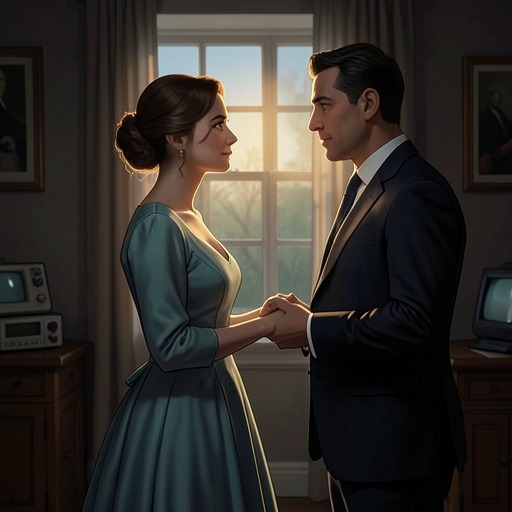
Arthur Ainsley had been attracted to Emma Harte while she was married to Joe Lowther, and pursued her for months after returning from the war. On Boxing Day 1919, at Blackie O’Neill’s, Emma appeared more receptive; encouraged by his ambitious parents, Arthur Ainsley pursued her with renewed determination. Their courtship lasted three months, and they married in the spring of 1920. Arthur Ainsley assumed Emma Harte was as enamoured of him as he was of her.
Emma Harte’s decision had different roots. Paul McGill’s silence and continuing absence had left her devastated, and she tried to accept that a future with him was impossible. Seeking a more ordinary life for herself and her children, she wanted a companion, a father for the children, and a suitable head of household. Arthur Ainsley seemed easy to live with and natural around the children; Emma also believed she could retain the upper hand in the relationship. She chose practical security over the kind of love she had experienced with Paul McGill, not because she mistook Arthur Ainsley for that love.
Emma Harte recognized her mistake within weeks of the wedding, but had conceived during their honeymoon. Arthur Ainsley’s charm soon seemed superficial, and his wit could be cruel; his shallowness and idleness appalled her. She found marital intimacy burdensome because her love and desire remained with Paul McGill. Nevertheless, taking her obligations seriously, she maintained a civil appearance and concealed her feelings. Arthur Ainsley, unaware of the emotional distance, was delighted by his good fortune and enjoyed Emma Harte’s prestige and money.
Infidelity, Drinking, and Estrangement
After the birth of the twins, Robin Harte and Elizabeth Harte, in 1921, Arthur Ainsley became careless and offhand with Emma Harte, taking the security of the marriage for granted. During her confinement he pursued other women, and the excitement of illicit relationships became difficult for him to give up. When he and Emma Harte resumed marital intimacy, he experienced repeated difficulties and eventually withdrew to his own room. He interpreted her lack of questions as a sign of her preoccupation with business, the children, and household demands, rather than as evidence of her attachment to someone else.
Arthur Ainsley had been drinking for eighteen months by the time the narrative describes his refuge in alcohol. He blamed his impotence with Emma Harte on drink, while the account presents alcohol as a means of excusing a problem he did not understand. It attributes his difficulty to his latent homosexuality and to the injury his self-esteem sustained in the presence of a wife whose strength and accomplishments he both needed and resented. Emma Harte had not deliberately undermined him; her independent qualities were enough to intensify his insecurity. He sought validation from shopgirls, waitresses, and barmaids, whose admiration bolstered his pride.
His feelings toward Emma Harte remain contradictory. He desires her, needs her judgment, and boasts of her achievements, yet resents her strength and envies her success. Fear of sexual failure keeps him at a distance, while his dependence on her coexists with grievances and repressed anger. During a later conversation, Emma Harte acknowledges to Frank Harte that Arthur Ainsley is fond of the children and can be good with them, but adds that she does not want a divorce yet. She is reasonably content, she says, because he does not interfere with her or with the business. Her decision to stay is therefore not a sign that the marriage has recovered: it reflects her preference to avoid upheaval while the children are young and to preserve her independence in the household.
Exposure and Divorce
When Paul McGill later asks why her marriage failed, Emma Harte gives the restrained explanation that she and Arthur Ainsley are incompatible. The answer leaves unspoken the deeper truth that her love for Paul McGill had not ended. Arthur Ainsley’s marriage has been shaped by that unacknowledged emotional absence, even as he mistakes Emma Harte’s outward composure for devotion.
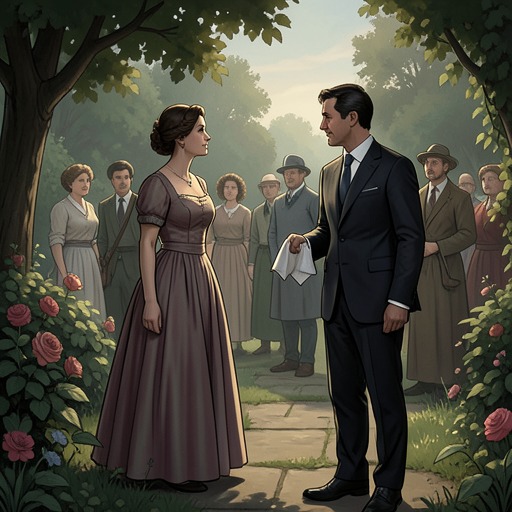
The marriage’s final break is negotiated through evidence rather than reconciliation. Emma Harte reveals that she has kept documents in a concealed safe and warns that she will give them to Arthur Ainsley’s father if Arthur causes trouble or attempts to divorce her. The material could expose his long-running infidelities, excessive drinking and gambling, and relationships with young men. Arthur Ainsley calls the accusation a lie and insists she is bluffing; Emma Harte tells him she has employed a detective for several years and knows about his private life. Her control of the evidence reverses the earlier imbalance between his vanity and her concealed knowledge.
After Arthur Ainsley’s mother dies of a heart attack, his father dies three months later, and Arthur inherits. He then allows Emma Harte to divorce him on the grounds of adultery, an apparent act of gallantry that surprises her brothers. Emma Harte has, however, secured his cooperation by paying him £10,000. Once the decree nisi is granted, she brings Robin Harte and Elizabeth Harte to live with her at Belgrave Square; Arthur Ainsley makes no objection. Kit, who is at boarding school, spends holidays with Emma Harte and approves of Paul McGill, while feeling no grief at Arthur Ainsley’s disappearance from his life.
Narrative Role
Arthur Ainsley’s part in the story exposes the cost of Emma Harte’s attempt to replace a lost love with a socially convenient marriage. His confidence that he has won a devoted wife is set against her deliberate compromise, and his belief that she is simply occupied with business and children obscures the emotional truth of their separation. His polished self-presentation, evasions, and dependence on Emma Harte’s resources make him a counterpoint to her discipline and practical command. The divorce completes that reversal: the man who had assumed the marriage was secure discovers that Emma Harte has understood its weaknesses, anticipated the consequences, and arranged her freedom without surrendering control of her household or business.